
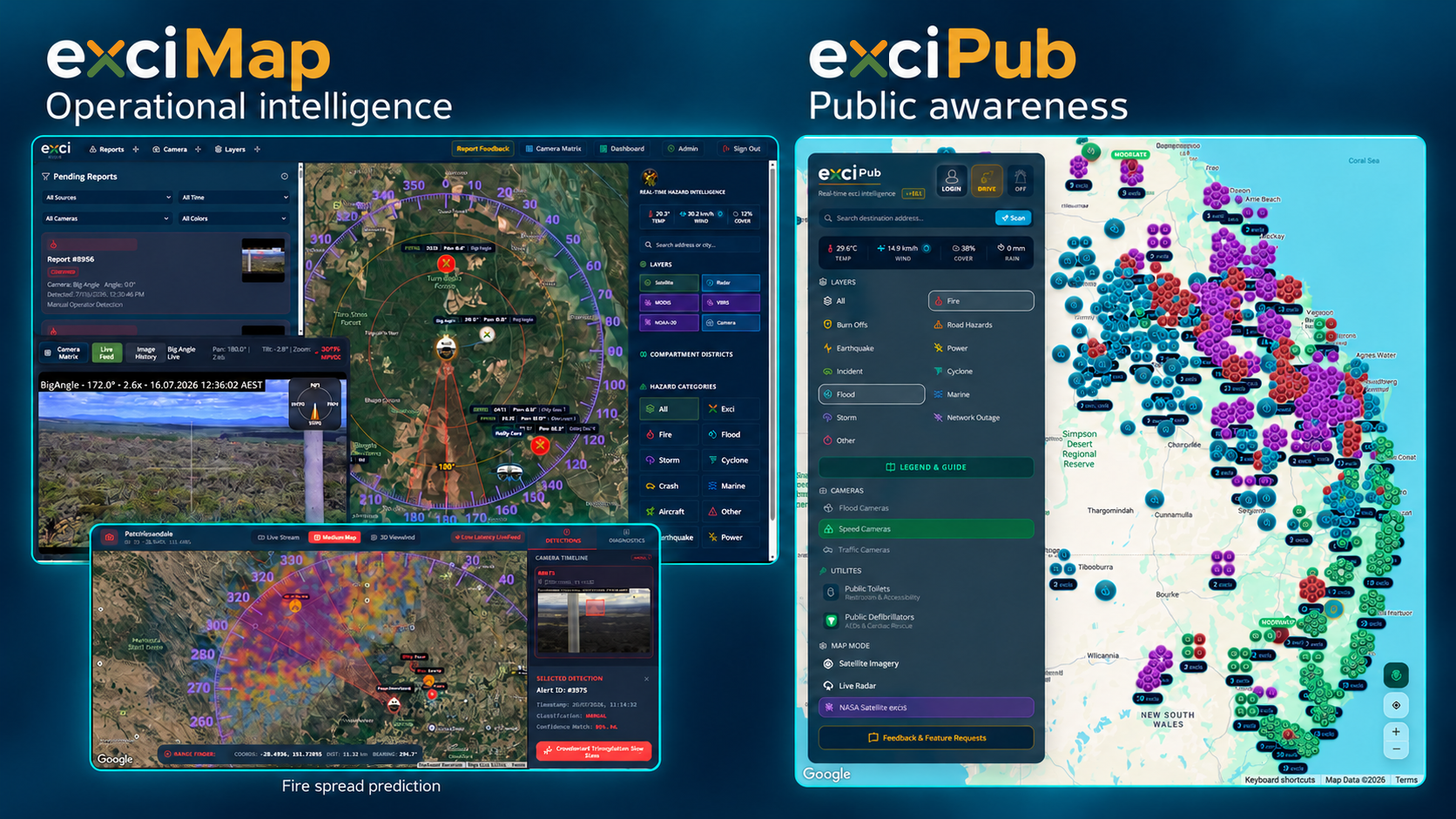
Australia’s projected bushfire losses strengthen the case for preparedness. For agencies, councils and asset managers, the challenge is turning earlier information into effective action. AI wildfire detection, Operational Intelligence and fire spread prediction can support response decisions, while accessible public information can help communities understand risk and prepare.
A destroyed home is visible. The years of disrupted work, ill health and lost income that follow are harder to photograph.
New modelling commissioned by Emergency Leaders for Climate Action (ELCA) estimates that bushfires will cost Australia an average of approximately $6 billion a year over the next 30 years. Even that figure leaves out ecological damage and the loss of cultural heritage.
The report, Prepare or Pay: Counting the Cost of Climate-fuelled Bushfires, argues for greater investment in preparedness alongside reductions in the emissions driving worsening fire conditions.
For organisations deciding where to invest, it raises a practical question: how can better information help prevent an ignition from becoming a prolonged community and economic disaster?
What does the $6 billion bushfire estimate include?
ELCA’s modelling estimates a long-term average annual loss across property, productive assets, business activity, employment and social impacts. It includes costs associated with health and mortality. It is a projection based on assumed fire frequencies and representative losses, rather than a measured annual bill or a firefighting expenditure figure.
The distinction matters. Describing the estimate as money “spent tackling fires” misses much of what the report measures.
Its cost allocation includes damage to homes and public buildings, interrupted production, lost trade and reduced productivity. Social, health, mortality and related costs account for almost one-third of the total.
The estimate uses FY2025 values. It excludes environmental and ecological losses, cultural heritage damage and several other costs that cannot readily be represented in the model.
The headline figure therefore captures only part of what communities stand to lose.
Earlier detection creates an opportunity to act
The report identifies early detection and rapid response as part of a broader preparedness effort.
The relationship is straightforward. Earlier awareness gives responders more time to investigate, assess conditions and organise initial attack. Where access, conditions and resources allow, that can improve the opportunity for containment.
It does not mean that every fire detected early can be stopped.
A fire in inaccessible terrain presents a different problem from one near an established road. Strong winds can limit response options. Several simultaneous ignitions can stretch available crews and aircraft.
An effective wildfire detection system must therefore connect with the people and procedures responsible for response.
exci is an Australian AI wildfire detection company. Its established detection capability identifies wildfire smoke within minutes, typically one to three minutes, supporting earlier assessment. Camera imagery provides information for investigation, while satellite observations contribute complementary coverage and context.
In 2020, exci, then operating as Fireball International, commissioned research from the Australian National University into the economic impact of early bushfire detection.
Under a scenario combining moderate growth in fire frequency with earlier detection enabling response to all modelled fires within 30 minutes, the researchers estimated approximately $14.4 billion in avoided economic losses over 2020–2049, equivalent to $8.2 billion in net present value.
These were modelled benefits before the costs of implementing detection systems, rather than measured savings from an exci deployment. Source: ANU, Measuring the economic impact of early bushfire detection, Table 6.
The research gives a specific economic basis for considering early detection within the broader preparedness effort described by ELCA.
The next operational question is what to do with that information.
What happens after a wildfire is detected?
After detection, operators need to verify the incident, establish its location, assess conditions and decide what response is appropriate. Operational Intelligence brings relevant information into that process. It connects an alert with the observations and context needed to investigate a developing fire and support decisions.
Following detection by exci’s AI wildfire detection system, the exciMap interface helps plantation owners, forestry businesses, utilities and other organisations assess the developing incident. It brings together detection reports, live camera imagery and mapped operational information so their teams can investigate fires, control cameras and make informed response decisions.
These capabilities address a familiar difficulty: an alert may arrive quickly, but understanding the incident can still take time.

A mapped detection helps establish location. Live imagery supports investigation. Incident records help operators follow developments and maintain a shared understanding of the event.
exciMap extends exci’s early detection capability into the assessment that follows. Human judgement remains central to that process.
Read more about human verification and operational control through exciMap.
How can fire spread prediction support response decisions?
Fire spread prediction estimates how a fire could develop under specified conditions. It can help responders assess potentially exposed areas, compare priorities and consider resource requirements. Its operational value depends on the model’s inputs, assumptions and timeliness, interpreted alongside current observations and professional judgement.
exci offers fire spread prediction within its operational capabilities. exciMap’s fire spread prediction capability incorporates terrain, vegetation, fuel characteristics and weather information to support incident assessment.

That moves the assessment beyond the fire’s current position. Operators can consider where it could travel and which assets or areas may need attention.
A prediction remains conditional. Changes in wind or other conditions can alter the fire’s development. The purpose is to support decisions under uncertainty, with the assumptions and limitations understood.
Earlier detection provides an opportunity. Operational Intelligence and fire spread prediction help responders assess how to use it.
Public awareness addresses a different information gap
Communities need information before an incident requires an operational response.
A CFA survey of 611 people living in bushfire risk locations in Victoria highlights the preparedness gap. In findings published in September 2025, CFA reported that 40% did not have a bushfire plan and 24% did not feel adequately prepared around their home. Living in an exposed area does not necessarily translate into practical preparation.
To help address this information gap, exci has introduced exciPub, a new free public service providing access to hazard and weather information. It helps residents and visitors stay informed about conditions around them, supporting public awareness and preparedness while complementing official emergency warnings and advice.
This public focus complements exciMap’s role in supporting organisations such as plantation owners, forestry businesses, utilities and government agencies. Their teams use operational information to assess developing fires and coordinate responses to protect land, assets and operations.
Access to information alone does not ensure that people will prepare for a bushfire. ELCA highlights the value of face-to-face engagement through local brigades and community groups. exciPub can support those conversations by making hazard information more accessible.
Turning earlier information into action
For agencies, councils and asset managers, the practical question is how to turn earlier information into action. Detecting a fire sooner creates time to investigate. Operational Intelligence helps responders assess the incident. Fire spread prediction supports decisions about where attention and resources may be needed.
exci connects early wildfire detection with these operational capabilities through exciMap.
exciPub serves a complementary purpose by making hazard information more accessible to the public, supporting awareness and conversations about preparedness.
Responders still need the capacity to act, and communities need practical support to prepare. Technology contributes when it strengthens those activities.
The costs described in Prepare or Pay extend across lives, livelihoods and landscapes. Earlier detection and Operational Intelligence support response decisions. Free public access to hazard information through exciPub supports awareness. Their practical value lies in helping responders and communities use that information to act and prepare.
By Gabrielle Tylor
exci – Early AI Wildfire Detection & Operational Intelligence
27 October 2026